 Cart
CartTo Draw Away Matter, Space and Time from Media and Meaning Instructor: Boris OndreičkaProgram: Art & Curatorial Studies, TransdiciplinaryCredit(s): 1Date: August 15, 22, 29, September 5Time: 09:00 ET
DESCRIPTION: To Draw Away takes its name from the Latin root of abstraction: abs-trahō, to pull away from the material object, and from the Greek aphairesis, things that exist from removing. Drawing itself, originally figurative, names the act of dragging a stylus across a surface. This seminar follows that double etymology across the entire historical trajectory of abstraction in visual and broader cultural production, from paleolithic mark-making to the present, drawing on physiology, ophthalmology, neurology, psychiatry, theology, art history, philosophy, and politics.
The “surface” of Abstract Art is globally accessible precisely because it operates outside the structures of formal language, untethered from any single cultural context. Non-figurative, non-objective, non-representational: abstraction is defined by negation, yet what it negates opens onto an esoteric inner vision touching the transcendental and metaphysical. It encompasses revelation and apocalypse, entoptic phenomena produced directly by the central nervous system, and the involuntary imagery of psychedelic intoxication or sensory deprivation. It was also, after World War II, an American export, deployed in the promotion of individualism against Stalinist Socialist Realism. Without the Abstract, as the seminar argues, we cannot get closer to truth or its knowing.
This seminar is suitable for students of art and art history, emerging curators and artists, collectors, and all serious lovers of art. It is a first installment of the long-term Intercentric Curatorial Studies program beginning in September.
Session One: On Abstract, Abstraction and Abstract Art in General / This session establishes the conceptual and historical ground, tracing abstraction from its etymological origins through its development across cultures and media. Students are introduced to the core paradox: that to draw away from the object is also to draw closer to something essential.
Session Two: On the Spiritual, the Psychopathological, the Entoptic and the Neuroaesthetical / This session examines the inner sources of abstraction, including aniconic and iconoclastic traditions, the visionary and hallucinatory, and the neurological. Students explore how Abstract Art operates at the threshold of the rational and the involuntary.
Session Three: On Specificity of Understanding and Tacit Knowing / This session addresses what it means to know and understand abstraction beyond formal language. Students engage with intuition as heuristic insight and examine the range of stimuli and irritants that bring it forth.
Session Four: On the Personal, the Relational and the Political / The final session situates abstraction within lived experience and political history, from its role as an instrument of Cold War ideology to its capacity for somatic self-knowledge and catharsis.
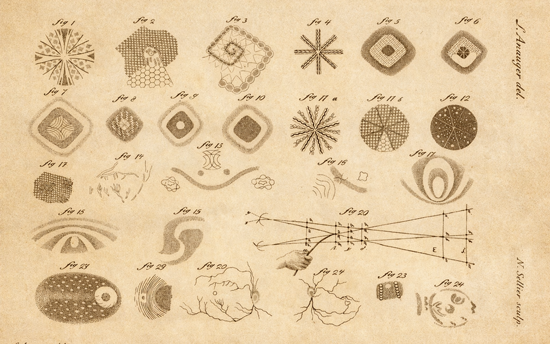
IMAGE: Johannes Evangelista Purkinje, Contributions to the Knowledge of Vision in Subjective Regard (Breslau, second edition)
To see The New Centre Refund Policy CLICK HERE.
To see The New Centre Refund Policy CLICK HERE.