 Cart
CartThe Organisation of Nature:
Trends in Theoretical Biology and Cognitive Science Instructor: Rasmus Haukedal Date & Time: March 13, 20, 27, April 3 09:00-11:30 ET
DESCRIPTION: Evolutionary biology is undergoing a profound theoretical shift, one in which dialectical principles—closely tied to organicism—are regaining centrality. These ideas are being reintegrated into a transformed scientific landscape, where new methodological tools make their study more viable than before. This move away from genocentric biology coincides with, informs, and is informed by parallel developments in cognitive science, particularly the enactive approach to mind and cognition. Moreover, it carries significant implications for philosophy of science, enabling a more reflexive, systematic, and critical framework—one in which the principles derived from scientific content can be applied to the study of scientific practice itself.
This Seminar seeks to reconstruct these emerging trends and explicitly link them to dialectics (in form and content), which is being taken up—implicitly or explicitly—by key researchers across these fields. To accomplish this, we will proceed in a circular fashion: from the history and theory of biology, to questions in systems theory and philosophy of mind, and back again. In doing so, we will articulate a renewed naturalism and philosophy of nature capable of bridging philosophy and science—ultimately confronting what Frank, Thompson, and Gleisner (2024) term the scientific blind spot.
Session 1, Modern Synthesis or Extended Synthesis?: The debate over the Extended Evolutionary Synthesis is somewhat confused, given the inchoate nature of the framework it seeks to replace. Is the Modern Synthesis a coherent paradigm, a mutable research agenda, or a philosophy of nature? We examine Betty Smocovitis’ historical critique (1992, 2023) to ask whether these shifts demand a new philosophy of nature, or merely reflect biology’s inherent tensions. We pay special attention to Lewontin’s claim that the organism is both subject and object of evolution, a dialectical tension central to the Seminar’s framework.
Readings: Smocovitis, “Unifying Biology”; “Every Evolutionist Their Own Historian”; Walsh & Sultan, “The Agential Perspective”; Lewontin, “The Organism as Subject and Object of Evolution”.
Session 2, Dialectical Biology and the Organisational Approach: Organicism, revived in the organisational view, challenges more limited frameworks (e.g., cybernetics) and aligns with dialectical traditions from Hegel to Levins and Lewontin. We explore how this approach reframes autonomy, closure, and causality in living systems—and why moving beyond operational closure (autopoiesis) to organisational closure matters for a dialectical philosophy of nature that takes us beyond dynamical systems theory.
Readings: Haldane, “A Dialectical Account of Evolution”; Gambarotto & Illetterati, “Hegel’s Philosophy of Biology?”; Jaeger, “The Fourth Perspective”; Kauffman, “Eros and Logos”; Mossio, “Organization as a Scientific Blind Spot”.
Session 3, Life-Mind Continuity: Dialectics and Enactivism: How does dialectical biology inform theories of cognition? We examine enactivism’s recent turn toward dialectics, asking whether a reformulated notion of natural normativity, rooted in biology, can escape neo-Aristotelian teleology. We outline what this means for a materialist theory of mind—and how it strengthens the ontological footing of philosophy of mind.
Readings: Di Paolo, “Evald Ilyenkov and the Enactive Approach”; “F/acts”; Ilyenkov, “Dialectics of the Ideal”; Illetterati, “Science as Experience of Freedom”; Gambarotto & Mossio, “Hegel and Enactivism”.
Session 4, Facing the Blind Spot: Towards a New Kind of Science: How can dialectical principles critically inform our understanding of scientific practice? We study how recent insights from biology and cognitive science may take us in the direction of a political philosophy of mind and science; moreover, we chart how this reflexive and interdisciplinary approach may address the so-called scientific blind spot: experience.
Readings: Slaby, “Political Philosophy of Mind”; Gambarotto & Van Es, “An Enactive Account of Labour”; Pradeu, “Philosophy in Science”; Frank, Thompson, and Gleisner, The Blind Spot; de Oliveira, van Es, and Hipólito, “Scientific Practice as Ecological-Enactive Co-construction”.
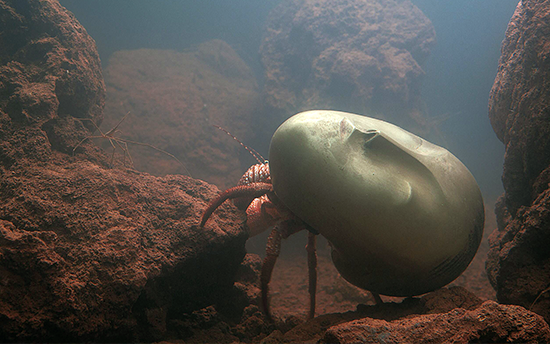
IMAGE: Pierre Huyghe, Zoodram 4, 2011
To see The New Centre Refund Policy CLICK HERE.
To see The New Centre Refund Policy CLICK HERE.